
 For Laboratory Use Only: Intended strictly for research & development, and quality control purposes by qualified personnel only. Not for human or animal consumption, or for any medical, therapeutic, or diagnostic use.
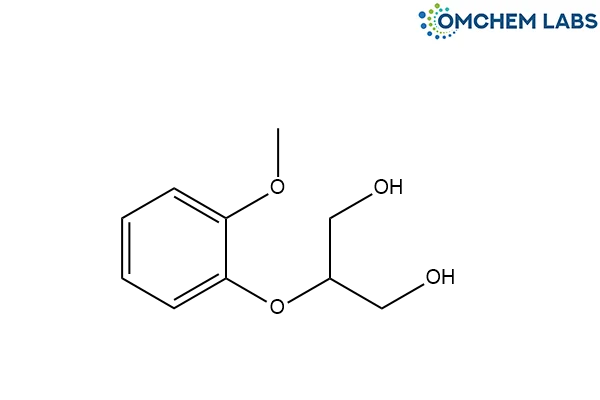
Guaifenesin Impurity B
| Catalogue No |
GUAI-OCL-002 |
| CAS NO |
14007-09-1 |
| Molecular Formula | C10H14O4 |
| Molecular weight | 198.22 |
| Inquiry Status | In Stock |
| Synonyms | 2-(o-Methoxyphenoxy)-1,3-propanediol |
Detailed Overview of this Impurity: Discover more about Impurity Standard & Analysis
Impurity Profiling of Guaifenesin Impurity B: Formation, Analytical Evaluation, and Characterization
Introduction
Impurity profiling is an important element of pharmaceutical quality assessment because it provides a systematic approach for understanding, detecting, identifying, and controlling chemical components associated with an active pharmaceutical ingredient or its related substances. Guaifenesin Impurity B can be considered within this broader analytical framework, where the evaluation of related substances supports understanding of the manufacturing process, purification performance, and chemical stability of the material.
Impurities associated with pharmaceutical substances may originate from starting materials, synthetic intermediates, reaction by-products, reagents, catalysts, solvents, or degradation pathways. ICH guidance recognizes process-related organic impurities and degradation products as important components of an impurity assessment.
For an impurity standard such as Guaifenesin Impurity B, analytical characterization provides a reference point for evaluating its identity and behavior during impurity testing. A comprehensive profiling strategy therefore combines knowledge of chemical synthesis with chromatographic separation, spectral interpretation, analytical procedure validation, purification, and impurity isolation. This integrated approach helps establish a scientifically sound understanding of the impurity profile without relying solely on a single analytical technique.
Formation of Impurities During API Synthesis
The formation of impurities is closely associated with the chemistry and operating conditions used during API manufacturing. Depending on the synthetic route, impurities may arise from incomplete conversion of starting materials, competing chemical reactions, intermediate carryover, transformation of reaction intermediates, or interactions involving reagents and process materials. Changes in reaction conditions can also influence the formation and distribution of related substances.
For compounds associated with the guaifenesin manufacturing process, an impurity such as Guaifenesin Impurity B may be investigated as part of a broader assessment of possible process-related or degradation-related components. However, the actual origin of a particular impurity should be established through appropriate analytical and process-development studies rather than assumed solely from its designation.
Impurity formation can also occur after synthesis. Exposure to unsuitable environmental conditions, including heat, moisture, oxygen, or light, may contribute to chemical transformation in susceptible substances. Consequently, impurity profiling generally considers both manufacturing-related impurities and potential degradation products. ICH Q3A specifically recommends scientific consideration of impurities that may arise during synthesis, purification, and storage.
Understanding the synthetic pathway is therefore an important first step in developing an impurity control strategy. Reaction knowledge can help establish which impurities are reasonably expected and can guide the selection of appropriate analytical procedures for their detection.
Analytical Data Interpretation Techniques
Analytical testing provides the principal means of detecting and evaluating impurities associated with pharmaceutical materials. Chromatographic techniques, particularly liquid chromatography, can be used to examine the separation of the principal component from related substances and to establish an overall chromatographic impurity profile. Depending on the chemical and physical characteristics of the material being investigated, other analytical techniques may complement chromatographic evaluation.
Mass spectrometry can provide useful information about molecular mass and fragmentation behavior, supporting the investigation of unknown or partially characterized components. Spectroscopic approaches such as nuclear magnetic resonance and infrared spectroscopy can provide additional structural information when sufficient material is available for characterization.
Interpretation should not rely on an individual chromatographic peak or spectral observation in isolation. Retention behavior, spectral characteristics, comparative reference-standard information, and knowledge of the synthetic pathway can be considered together when assessing an impurity. This orthogonal approach improves confidence in impurity identification and helps distinguish genuine related substances from analytical artifacts or unrelated signals.
For Guaifenesin Impurity B, an appropriate analytical strategy may therefore involve comparison with a suitably characterized reference material together with chromatographic and spectroscopic assessment. The objective is to establish a reliable relationship between the analytical signal and the identity of the impurity rather than simply documenting the presence of a peak.
Method Validation for Impurity Detection
Analytical procedure validation is essential when an analytical method is intended to generate reliable information for impurity detection or measurement. ICH Q2(R2) states that validation is intended to demonstrate that an analytical procedure is suitable for its intended purpose. The appropriate validation characteristics depend on the intended application of the procedure.
For impurity profiling, method performance is generally considered in terms of characteristics such as specificity or selectivity, accuracy, precision, response behavior over the applicable range, sensitivity, and robustness, as appropriate for the analytical purpose. The method should be capable of distinguishing the impurity of interest from the principal substance and other components that may be present in the sample.
System suitability is also an important element of routine analytical procedures because it provides an ongoing check that the analytical system is performing appropriately. ICH Q2(R2) identifies system suitability as an integral part of analytical procedures, while robustness is generally considered during analytical procedure development.
For Guaifenesin Impurity B, a scientifically appropriate validation strategy would therefore depend on the intended use of the impurity standard and the analytical procedure in which it is applied. Suitably characterized reference materials are particularly important when establishing the identity and analytical response of an impurity.
Purification Strategies for Reducing Impurities
Once potential impurities have been identified, purification becomes an important component of process and quality control. The selection of a purification technique depends on the chemical properties of the target compound and the impurities, including differences in solubility, polarity, volatility, adsorption behavior, and chemical stability.
Crystallization can be useful when the desired compound and associated impurities demonstrate different solubility characteristics. Liquid-liquid extraction may exploit differences in partitioning between phases, while filtration and related physical separation operations can assist in removing process-derived materials. Chromatographic purification can provide greater separation capability when structurally similar compounds are difficult to distinguish using conventional techniques.
For an impurity such as Guaifenesin Impurity B, purification may also be considered from the perspective of obtaining material suitable for analytical characterization. In this situation, the objective is not necessarily to remove the impurity from an API batch, but rather to separate and enrich the impurity sufficiently to support identity confirmation and reference-standard development.
An effective purification strategy should therefore be selected according to the intended objective. Process purification focuses on controlling unwanted components in the desired pharmaceutical substance, whereas preparative purification of an impurity focuses on obtaining sufficiently characterized material for analytical investigation.
Isolation and Characterization of Impurities
Isolation provides an opportunity to obtain an impurity in a form suitable for detailed structural investigation. This can be particularly valuable when an impurity cannot be confidently identified from routine analytical data alone. Preparative chromatographic approaches may be used to separate the impurity from the principal component and other related substances.
Following isolation, structural characterization can involve complementary techniques such as mass spectrometry, nuclear magnetic resonance spectroscopy, infrared spectroscopy, and other appropriate analytical approaches. Each technique provides different information, and combining several independent observations can increase confidence in the proposed structure.
For Guaifenesin Impurity B, the analytical objective is to establish a consistent relationship between the impurity standard and the corresponding analytical response. A suitably characterized impurity reference material can subsequently support analytical method development, impurity identification, system suitability activities, and comparative testing where appropriate.
Isolation and characterization should also be considered within the wider impurity-control framework. ICH Q3A describes the importance of identifying and characterizing relevant impurities and of considering potential impurities arising from synthesis, purification, and storage.
Conclusion
The impurity profiling of Guaifenesin Impurity B represents an integrated analytical process involving an understanding of impurity formation, appropriate analytical data interpretation, validated analytical procedures, purification, and structural characterization. Rather than relying on a single testing technique, a comprehensive approach combines process knowledge with complementary analytical evidence.
Understanding how related substances may originate during synthesis or subsequent handling provides the foundation for developing an effective impurity-control strategy. Chromatographic and spectroscopic techniques then support detection and structural assessment, while analytical procedure validation establishes confidence in the reliability of the resulting observations. Purification and isolation techniques further enable the investigation and characterization of individual impurities when additional structural information is required.
Overall, systematic impurity profiling supports pharmaceutical quality by providing a scientific framework for identifying and controlling chemical components associated with the manufacturing and storage of pharmaceutical substances. The same principles can be applied to the evaluation of impurity standards across different API systems, with the specific analytical approach determined by the chemistry, manufacturing pathway, and intended analytical purpose of each substance.